Laminate vs Acrylic vs Membrane Finish: Complete Guide
📅 March 2026 · ⏱️ 6 min read · ✍️ Budget Interiors Design Team
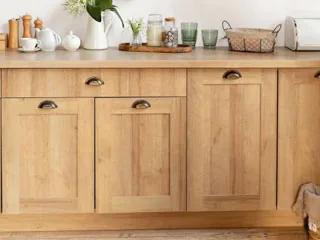
Laminate vs Acrylic vs Membrane: Complete Finish Guide for Indian Homes
The shutter finish is what your kitchen looks like every single day. It's the colour, the texture, the light reflection, and the maintenance requirement that defines the visual character of the space. Three finishes dominate the Indian modular kitchen and wardrobe market: laminate, acrylic, and membrane-pressed. Each has genuine strengths and real weaknesses. Choosing between them without understanding the differences is how you end up with a beautiful-in-the-showroom kitchen that frustrates you in daily use.
Laminate — The Reliable All-Rounder
Laminate (thin decorative paper layer bonded to a high-pressure resin sheet, then applied to the plywood shutter) is the most widely used finish in Indian kitchens and wardrobes. The reasons are simple: it's durable, available in hundreds of patterns and textures, handles heat and moisture well when properly applied, and provides genuine value for money.
Strengths: Wide variety of textures and patterns — wood grains, solids, marble effect, geometric — that photograph well and look good in person. Good heat resistance (rated to 150°C+ for quality products). Wipeable with a damp cloth. Resistant to moderate impact. Available in matte, satin, and gloss finishes.
Weaknesses: The edges are the vulnerability — if edge banding is poorly applied or peels off at the seam, moisture enters the substrate. Quality of laminate varies enormously; cheap laminates fade and scratch faster. High-gloss laminate shows fingerprints readily in kitchens.
Best for: Most kitchen and wardrobe applications. Particularly recommended for: families with children (robust, wipeable), budget-to-mid-range projects, and any kitchen with heavy daily cooking.
Price guide: ₹600–₹1,400 per sq ft for quality laminate shutters installed (Greenlam, Merino, Century)
Acrylic — The Premium Visual Choice
Acrylic shutters are solid sheets of PMMA plastic (the same material as Perspex/Plexiglas) bonded to an MDF substrate. The colour runs through the full thickness of the sheet rather than sitting as a surface layer, giving a depth and vibrancy that laminate can't match.
Strengths: Unmatched gloss depth and colour vibrancy — high-gloss acrylic has a mirror-like surface quality. Inherently moisture-resistant (the face material itself is impermeable). Scratch-resistant (harder surface than laminate). Doesn't show the texture variation of laminate. Looks genuinely premium.
Weaknesses: Shows fingerprints constantly in a kitchen — requires daily wiping to maintain appearance. Scratches show visibly (small scratches catch light on the gloss surface). Higher cost. Available in limited textures — primarily high-gloss, though frosted acrylic exists. Not suitable for very high heat zones adjacent to gas hobs (some expansion cracking risk).
Best for: Showpiece kitchens where appearance is the priority, master bedroom wardrobes that aren't in daily heavy use, projects where budget is generous and maintenance is acceptable.
Price guide: ₹1,200–₹2,200 per sq ft installed
Membrane-Pressed (PVC Membrane) — The Modern Middle Ground
Membrane-pressed shutters are made by vacuum-pressing a PVC film onto a routed MDF substrate under heat. The film wraps around edges and into routed grooves seamlessly — creating shutters with the organic, seamless appearance of a single moulded piece.
Strengths: No exposed edges (the membrane wraps around completely) — one of membrane's biggest advantages over laminate in humid conditions. Excellent for textured and profiled shutter designs — the membrane follows contours that laminate can't. Good for painted-look finishes in smooth matte. Available in a wide range of matte texture profiles popular in contemporary design.
Weaknesses: Less heat-resistant than laminate — membrane shutters near hobs can show blistering if the gap between shutter and heat source is inadequate. The MDF substrate is moisture-sensitive if the membrane is ever damaged or peeled. Not recommended for the immediate hob area in Indian kitchens.
Best for: Wardrobe shutters, upper kitchen cabinets (away from heat), living room furniture, and any application where a seamless profiled shutter look is desired.
Price guide: ₹900–₹1,600 per sq ft installed
Understanding the Three Finish Categories in Chennai's Market
When Interior designers in Chennai quote kitchen shutters, they're typically choosing from three primary finish categories: laminate (also called HPL — High Pressure Laminate), acrylic, and membrane (also called PVC or vinyl wrap). Each is a distinct manufacturing process with different durability profiles, aesthetic possibilities, and price points. The confusion arises because marketing names vary by brand and vendor, so "glossy finish" could refer to high-gloss laminate, acrylic, or polished membrane — completely different materials with very different long-term behaviour.
Laminate shutters use a thin decorative surface (0.8–1mm HPL sheet) bonded to an MDF or plywood core under high pressure and temperature. Brands like Merino, Greenlam, Stylam, and Formica are the reference names in India. HPL laminates are the most durable finish for Chennai kitchens: they resist heat, cleaning chemicals, moderate impact, and UV light without significant fading. The limitation is aesthetics — until recently, laminates couldn't achieve truly mirror-like gloss finishes, though modern high-gloss HPL laminates now come close. Textured, matte, and woodgrain laminates are where this finish category excels and where it dominates the market.
Acrylic Shutters: The Premium Gloss Option
Acrylic shutters use a thick acrylic sheet (typically 3–5mm) bonded to an MDF core, producing a genuinely glass-like high-gloss finish that no laminate product fully replicates. The visual depth and reflectiveness of acrylic is unmatched — a white acrylic kitchen looks bright and expensive in a way that white laminate does not. This explains why acrylic dominates the premium kitchen segment in Chennai showrooms and design magazine photography.
The practical limitations in a Chennai context are real, however. Acrylic scratches more easily than HPL laminate — routine kitchen activity (ring marks, scouring pads, sharp-edged utensils near the counter) will mark an acrylic shutter surface over time. These scratches can be polished out, but it requires effort. Second, in Chennai's direct sunlight, white and light-colour acrylic shutters can develop a slight yellow tint over 5–8 years — less so with premium brands. Third, fingerprints are highly visible on gloss acrylic, requiring frequent wiping in a working kitchen.
For Chennai homeowners who prioritise look and have a domestic help arrangement (so daily wiping is practical), acrylic is an excellent choice for the kitchen. For kitchens used intensively for Indian cooking — high-heat, steam-heavy cooking environments — a combination approach works well: acrylic on upper cabinets (less touched, more visible) and a durable textured laminate or membrane on lower cabinets and base units where wear is heaviest.
Membrane Finish: The Practical Middle Ground
Membrane shutters — also called vinyl wrap or PVC wrap shutters — involve pressing a thin PVC film onto an MDF profile under heat and vacuum. This manufacturing process allows routed profiles and three-dimensional shapes that flat laminates can't replicate, giving membrane shutters the ability to mimic wood grain, beading, and carved panel looks realistically. This is why membrane shutters are popular for bedroom wardrobe shutters and kitchen shutters where a traditional or transitional style is desired.
In Chennai's climate, membrane shutters perform well in non-wet areas (bedrooms, living room cabinetry, dry areas of kitchens). In direct-steam environments — directly above cooktop areas — membrane edges can lift over time if the adhesive is not properly cured or if the MDF core swells from steam exposure. Specifying moisture-resistant MDF cores and proper edge sealing addresses this in professional installations. Budget Interiors uses moisture-resistant MDF for all membrane shutters in kitchen applications as standard.
Price position: membrane shutters sit between laminate and acrylic, typically 15–25% above equivalent laminate shutters and 20–30% below acrylic. For a full kitchen with 15–18 shutter panels, this difference represents ₹18,000–35,000. The decision often comes down to aesthetic preference — the routed profile look requires membrane, while flat contemporary shutters are best served by quality laminate or acrylic.
Making the Decision for Your Chennai Kitchen
The choice between these three finishes should be driven by cooking habits, light conditions, maintenance preferences, and budget in that order — not just by what looks best in a showroom. Heavy Indian cooking households in Chennai with limited time for maintenance should lean toward textured HPL laminate (Merino or Greenlam matte finish) — genuinely the most durable finish for real cooking environments. Households with domestic help who maintain kitchens daily, or those cooking lightly, can confidently choose acrylic for the premium look. Those wanting a traditional or carved aesthetic should consider membrane.
One approach that works particularly well in Chennai: use acrylic or membrane for the visual focal points (island, tall unit, wall unit opposite the entrance) and durable laminate for the workhorse sections (below the cooktop, the sink cabinet, lower base units). This hybrid approach captures the aesthetic impact of premium finishes while protecting the highest-wear areas with the most durable one. Budget Interiors regularly specifies these combinations and can show completed project examples in your 3D design consultation.
👉 Explore our Modular Kitchen options in Chennai
See Modular Kitchen designs & pricing →Ready to Transform Your Chennai Home?
Get a free 3D design consultation from Budget Interiors.
Get Free Design Consultation WhatsApp NowExplore Related Pages
Interested in this topic? View our modular kitchen finishes and wardrobe finishes — or learn more about our interior design Chennai.

