Traditional Teak Wood Mandir Designs for Villas
📅 March 2026 · ⏱️ 6 min read · ✍️ Budget Interiors Design Team
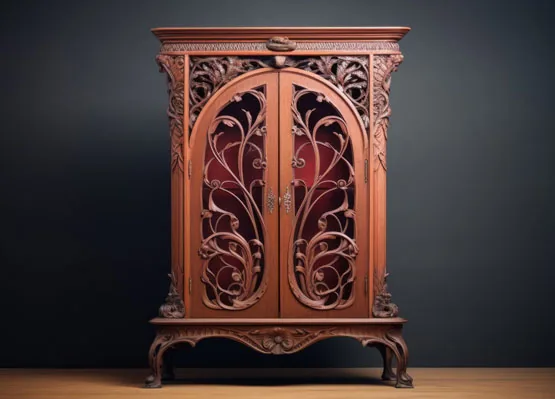
Traditional Teak Wood Mandir Designs for Chennai Villas
In a Chennai villa where space is not the constraint and where the family's devotional life is central to how the home is designed, the traditional teak wood mandir — a handcrafted temple structure inside the home — is one of the most profound investments a homeowner can make. Not in a financial sense alone, but in the sense of creating something that will outlast the present generation, that will be photographed at every family celebration, and that carries a quality of craftsmanship that no flat-pack or modular solution can replicate. Here's what goes into designing and building a genuine traditional teak wood mandir in 2026.
What Makes a Mandir "Traditional"
Traditional temple architecture in is defined by a set of formal elements derived from Agama Shastra — the Sanskrit texts governing temple construction. In a domestic mandir these principles are adapted in scale, but the vocabulary remains recognisable: the gopuram (entrance tower), the garbhagriha (sanctum), mandapa (pillared pavilion), and the use of materials that are considered sacred — primarily teak, rosewood, and stone. A traditional mandir in a Chennai villa will incorporate some combination of these elements in a form appropriate to the home's scale.
Design Elements of a Premium Teak Mandir
The frame: Solid teak pillars with turned or carved detailing at the capital (top) and base. The pillar is the most tactile element — the grain, the weight, the smell of good teak is immediately apparent to anyone who touches it. We use plantation teak (kiln-dried, FSC-certified) for all pillar and structural elements.
The gopuram topping: The stepped pyramid crown above the main entrance arch is the signature element of a Dravidian-style mandir. In a domestic installation, this is typically executed in carved wood or CNC-carved MDF finished in white duco or gold leaf, ranging from a simple three-step pyramid to an elaborately detailed miniature temple tower.
The jali work: Carved lattice screens on the side panels, between pillars, and as the back panel behind the deity. Traditional jali patterns include the lotus, the hamsa (swan), the peacock, the vine scroll, and geometric interlocking patterns. Hand-carved jali in solid teak is the traditional method; CNC-carved jali in MDF finished in teak stain or white duco is the contemporary equivalent at significantly lower cost.
The deity platform (peeta): Raised marble or teak platform on which the idols are placed. Traditionally in white Makrana marble or pale stone; in contemporary installations often in white composite stone that's easier to maintain.
Storage: Traditional mandirs in villas include dedicated storage integrated beneath or beside the sanctum — for puja books, the conch, brass vessels, flower offerings, and incense. Designed with closed doors so the storage doesn't intrude on the sacred visual.
Dedicated Mandir Room vs. Mandir Unit
In a villa with a dedicated pooja room (a full room allocated to worship), the mandir occupies one full wall or is built as a free-standing structure centred in the room. This allows the full architectural vocabulary — pillars, gopuram, jali, elevated platform, surrounding mandapa. In a villa where the mandir is within the living room or a dedicated alcove, the design is the same in character but scaled to the wall section available.
Cost of a Traditional Teak Mandir in Chennai
- Entry-level (teak-effect finish, basic CNC): ₹1.2–₹2 lakhs
- Mid-range (solid teak pillars, CNC jali, white duco finish): ₹2–₹4 lakhs
- Premium (full solid teak, hand-carved details, gold leaf accents, marble peeta): ₹5–₹12 lakhs
- Full dedicated mandir room with carved wall treatments: ₹8–₹20 lakhs
Timeline: 4–8 weeks from design approval for most mandir projects, depending on complexity and carving scope.
Practical Guide for Chennai Homes
When considering traditional teak wood mandir designs for villas for a Chennai home, the climate and local living patterns play a significant role in the right approach. Chennai's combination of monsoon humidity (peaking at 85–95% RH during the northeast monsoon), year-round heat above 28°C, and — in coastal areas — salt air creates specific requirements that generic interior design advice often overlooks. Every decision in this category should be evaluated against Chennai's specific conditions, not just aesthetic preference or price alone.
The most successful Chennai interiors in this category share a common thread: materials selected for local climate performance, specifications adapted for intensive Indian household use, and maintenance requirements that are realistic for a working Chennai family. This means prioritising durability and ease of maintenance alongside aesthetics — choices that look identical in a showroom but diverge significantly in performance after three monsoon seasons.
Budget Interiors has completed projects across Chennai — from Perumbakkam and OMR to Kilpauk, Anna Nagar, and Adyar — giving us a clear picture of which approaches hold up and which fail under local conditions. The guidance in this article draws from that project experience, not from generic design principles.
Materials and Specifications That Matter
For any fixed interior work in this category, the specification of structural materials — particularly plywood — has a disproportionate impact on long-term performance. ISI-certified BWR (Boiling Water Resistant) plywood, manufactured to IS 303 standard by brands like Century Ply, Greenply, or Kitply, is the minimum appropriate specification for Chennai's humidity conditions. This is the plywood that won't warp, swell, or delaminate through the northeast monsoon cycle year after year. Budget Interiors uses ISI-certified BWR plywood on all structural carcass work as standard — not as a premium upgrade, as the baseline.
Surface finish choices should consider where in the home the work is located and what exposure it will face. Kitchen and bathroom-adjacent areas require different specification from bedroom furniture. Hardware selection — hinges, drawer runners, handles — similarly needs to account for load, use frequency, and moisture proximity. Soft-close Hettich hardware on kitchen drawers handling heavy Indian vessels is an investment that pays back in daily usability and decade-long performance; local-brand alternatives save ₹15,000–25,000 upfront but typically require replacement within 5–7 years of intensive use.
Planning and Budgeting Realistically for Chennai
Realistic budget planning for this type of interior work in Chennai involves understanding the total cost of ownership, not just the installation cost. Materials with higher upfront cost — ISI plywood over commercial grade, Hettich hardware over local alternatives, quartz countertops over granite — typically have lower total cost over 10 years when you factor in the avoided replacement and repair costs. The calculation is specific to Chennai because our climate accelerates material degradation in ways that make the quality premium more valuable here than in milder climates.
Getting an accurate quote requires providing accurate inputs: your flat's actual dimensions, your scope of work in detail, and your material preferences. Quotes based on approximate dimensions or vague scope are not comparable — a quote for "kitchen with wardrobes" can represent anything from ₹4 lakhs to ₹15 lakhs depending on specification and scope. Budget Interiors provides itemised quotes with every material and component specified by name and grade, so you can compare our numbers directly with any other vendor's on equal terms. The free site visit and 3D consultation is where this specificity begins.
Questions to Ask Your Interior Designer
Before committing to any interior project in this area, these questions help distinguish professional vendors from those who will disappoint: "What plywood grade and brand do you use, and can you show me the ISI certification?" — the answer should be specific and verifiable. "What hardware brand do you specify for the moving parts?" — again, specific brand and model, not "good quality hardware." "What warranty do you provide, and what does it cover specifically?" — duration, what failures are covered, and the rectification process should all be explicit. "Can I visit a completed project similar to what I'm planning?" — most satisfied clients will accommodate this when asked, and a site visit reveals quality that photography cannot.
Budget Interiors offers 10-year warranty on all project work, 15-day delivery commitment once materials are confirmed, and free 3D design consultation before any payment commitment. These commitments are written into every project contract, not verbal assurances. Contact us for a site visit and quote — we're available Monday to Saturday, 9am to 7pm.
👉 Explore our Pooja Units options in Chennai
See Pooja Units designs & pricing →Ready to Transform Your Chennai Home?
Get a free 3D design consultation from Budget Interiors.
Get Free Design Consultation WhatsApp NowExplore Related Pages
Interested in this topic? View our teak wood pooja units Chennai — or learn more about our wood interior designers Chennai.

