LED-Lit Display Cabinets: Creating Drama in Dining Areas
📅 March 2026 · ⏱️ 5 min read · ✍️ Budget Interiors Design Team
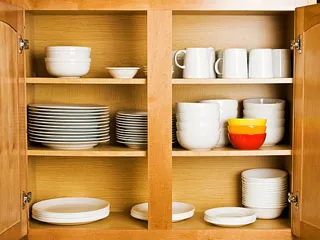
LED-Lit Display Cabinets: Creating Drama in Dining Areas
There's a moment at dinner parties that every Chennai homeowner wants — when the dining area comes alive in the evening, the display cabinet glows with backlit crockery, and the room has a warmth and drama that makes guests stop mid-conversation and notice. A well-designed LED-lit display cabinet or crockery unit isn't just storage — it's the centrepiece of the dining area, the thing that gives the room its character after dark. Here's how to design and light one that delivers this effect every evening.
Why Lighting Transforms Display Cabinets
An unlit crockery unit is a functional storage piece. The same unit with LED lighting is a design feature. The reason is simple physics: when light comes from within or behind objects rather than from above, it creates depth, shadow, and the impression that the objects are floating rather than sitting on a surface. Glass crockery, crystal, and even well-chosen ceramics become architectural elements when lit from within.
Types of LED Lighting for Display Cabinets
LED strip under each shelf (shelf-mounted): The most effective approach for crockery and glassware display. Warm-white LED strips mounted on the underside of each shelf cast light downward onto the items below, illuminating them from above while creating a glow on the shelf surface. The warm reflections on glassware and ceramics are the effect that makes guests notice. This is the standard lighting approach for premium crockery units in Chennai dining rooms.
LED strip at the back panel: A single LED strip running along the back panel of the cabinet (usually at the top, bottom, or behind a glass back panel) creates a backlight effect. Best used in combination with shelf lighting rather than alone. A glowing back panel behind glassware creates a halo effect that looks deliberately designed.
Spotlights in the cabinet top: Recessed mini-spotlights in the ceiling of the cabinet compartment pointing down onto specific items. More directional and dramatic than strip lighting — useful for highlighting a specific centrepiece or object rather than overall cabinet illumination.
Puck lights: Small circular under-cabinet lights that are easier to retrofit into existing cabinets. Less sleek than integrated strip lighting but a practical upgrade for existing units.
Glass Selection for Maximum Drama
The glass in the cabinet doors dramatically affects how the lighting reads. Options:
- Clear glass: Maximum visibility, lights penetrate fully, displays inside are clearly legible from across the room.
- Fluted/reeded glass: Distorts the view of contents in a beautiful way — items inside glow through the fluting pattern rather than being directly visible. Creates a moody, sophisticated effect particularly good with warm lighting.
- Smoked or tinted glass: Reduces visibility of contents while letting light through. Useful when the display inside isn't perfectly curated.
- No glass (open shelves): Maximum display impact but requires disciplined curation — everything on the shelf is prominently visible.
What to Display
The most common mistake in display cabinets is over-filling them with mixed, mismatched objects. A display cabinet looks intentional when it follows basic curation principles: limit to 3–5 categories of objects, use height variation (some tall items, some short), create breathing space between groupings, and choose a consistent colour palette within the display. Backlit shelves with a few well-chosen pieces of crockery, a pair of matching vases, and some greenery look dramatically better than the same space crammed with 30 items of no particular arrangement.
Practical Guide for Chennai Homes
When considering led-lit display cabinets: creating drama in dining areas for a Chennai home, the climate and local living patterns play a significant role in the right approach. Chennai's combination of monsoon humidity (peaking at 85–95% RH during the northeast monsoon), year-round heat above 28°C, and — in coastal areas — salt air creates specific requirements that generic interior design advice often overlooks. Every decision in this category should be evaluated against Chennai's specific conditions, not just aesthetic preference or price alone.
The most successful Chennai interiors in this category share a common thread: materials selected for local climate performance, specifications adapted for intensive Indian household use, and maintenance requirements that are realistic for a working Chennai family. This means prioritising durability and ease of maintenance alongside aesthetics — choices that look identical in a showroom but diverge significantly in performance after three monsoon seasons.
Budget Interiors has completed projects across Chennai — from Perumbakkam and OMR to Kilpauk, Anna Nagar, and Adyar — giving us a clear picture of which approaches hold up and which fail under local conditions. The guidance in this article draws from that project experience, not from generic design principles.
Materials and Specifications That Matter
For any fixed interior work in this category, the specification of structural materials — particularly plywood — has a disproportionate impact on long-term performance. ISI-certified BWR (Boiling Water Resistant) plywood, manufactured to IS 303 standard by brands like Century Ply, Greenply, or Kitply, is the minimum appropriate specification for Chennai's humidity conditions. This is the plywood that won't warp, swell, or delaminate through the northeast monsoon cycle year after year. Budget Interiors uses ISI-certified BWR plywood on all structural carcass work as standard — not as a premium upgrade, as the baseline.
Surface finish choices should consider where in the home the work is located and what exposure it will face. Kitchen and bathroom-adjacent areas require different specification from bedroom furniture. Hardware selection — hinges, drawer runners, handles — similarly needs to account for load, use frequency, and moisture proximity. Soft-close Hettich hardware on kitchen drawers handling heavy Indian vessels is an investment that pays back in daily usability and decade-long performance; local-brand alternatives save ₹15,000–25,000 upfront but typically require replacement within 5–7 years of intensive use.
Planning and Budgeting Realistically for Chennai
Realistic budget planning for this type of interior work in Chennai involves understanding the total cost of ownership, not just the installation cost. Materials with higher upfront cost — ISI plywood over commercial grade, Hettich hardware over local alternatives, quartz countertops over granite — typically have lower total cost over 10 years when you factor in the avoided replacement and repair costs. The calculation is specific to Chennai because our climate accelerates material degradation in ways that make the quality premium more valuable here than in milder climates.
Getting an accurate quote requires providing accurate inputs: your flat's actual dimensions, your scope of work in detail, and your material preferences. Quotes based on approximate dimensions or vague scope are not comparable — a quote for "kitchen with wardrobes" can represent anything from ₹4 lakhs to ₹15 lakhs depending on specification and scope. Budget Interiors provides itemised quotes with every material and component specified by name and grade, so you can compare our numbers directly with any other vendor's on equal terms. The free site visit and 3D consultation is where this specificity begins.
Questions to Ask Your Interior Designer
Before committing to any interior project in this area, these questions help distinguish professional vendors from those who will disappoint: "What plywood grade and brand do you use, and can you show me the ISI certification?" — the answer should be specific and verifiable. "What hardware brand do you specify for the moving parts?" — again, specific brand and model, not "good quality hardware." "What warranty do you provide, and what does it cover specifically?" — duration, what failures are covered, and the rectification process should all be explicit. "Can I visit a completed project similar to what I'm planning?" — most satisfied clients will accommodate this when asked, and a site visit reveals quality that photography cannot.
Budget Interiors offers 10-year warranty on all project work, 15-day delivery commitment once materials are confirmed, and free 3D design consultation before any payment commitment. These commitments are written into every project contract, not verbal assurances. Contact us for a site visit and quote — we're available Monday to Saturday, 9am to 7pm.
👉 Explore our Crockery Units options in Chennai
See Crockery Units designs & pricing →Ready to Transform Your Chennai Home?
Get a free 3D design consultation from Budget Interiors.
Get Free Design Consultation WhatsApp NowExplore Related Pages
Interested in this topic? View our display crockery units Chennai and TV unit designs — or learn more about our living room interiors.

